Diffusion Language Models & Representation Learning
I am interested in how diffusion-based language models organize and transform information, and how their internal representations differ from autoregressive systems.
Research
I study the representations and mechanisms that shape model behavior—then use statistical tools to make those behaviors more reliable, interpretable, and causally meaningful.
Three connected directions guide my current questions.
I am interested in how diffusion-based language models organize and transform information, and how their internal representations differ from autoregressive systems.
I explore causal effect estimation and causal reasoning, including how pre-trained prior-data fitted networks can support fast, principled inference.
I use interpretability and uncertainty quantification to ask what language models compute, when their outputs can be trusted, and how reliability can be measured.
Peer-reviewed contributions in machine learning and clinical research.
ICML 2026 · Proceedings
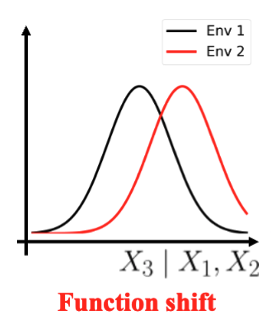
FANS offers a unified framework for causal mechanism shifts by separating changes in causal functions from changes in noise. Independence checks between estimated noise and parent variables distinguish function-driven and noise-driven shifts while accommodating complex noise changes.
IJID 2026 · Original research
This collaborative study develops static and dynamic scoring systems for post-acute sequelae of SARS-CoV-2 using evidence from a Korean cohort.
Methodological work grounded in real questions and cross-disciplinary collaboration.
Institute of Data Science
Department of Statistics and Data Science, Yonsei University
Provided statistical consultation across disciplines, including research in New Testament studies and environmental finance.
Machine Learning and Artificial Intelligence Lab
Yonsei University · Advisor: Prof. Kyungwoo Song
Reviewed research on LLM reasoning, causal inference, and sharpness-aware minimization, building the foundation for my current research directions.